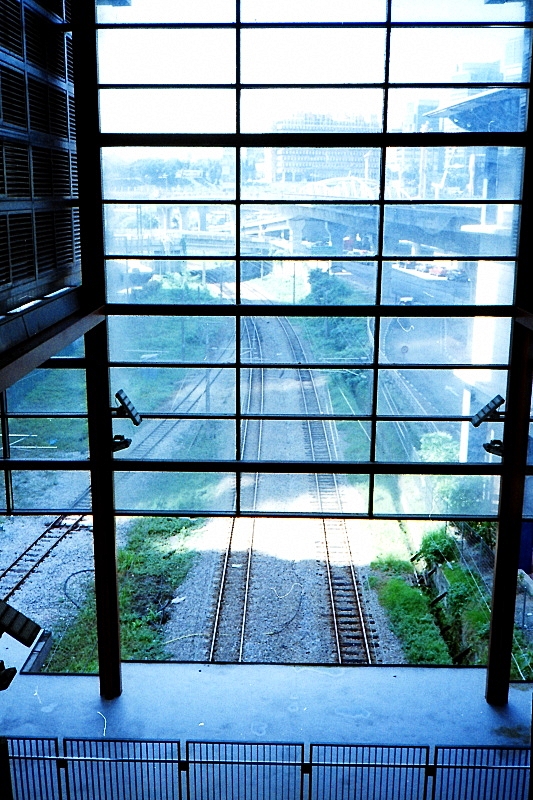
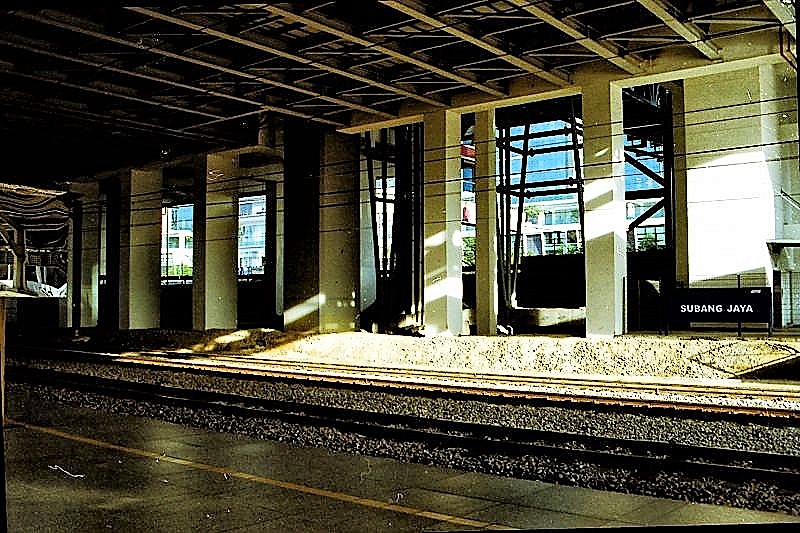
People and Places: Film photography favorites, image making with a Konica C35 EF, sights, and scenes from a walkabout in the city, Part II.
<< Click on image for enlarged Lightbox display >>
The second set of images, after
Part I, on my walkabout in the city with the Konica C35 EF. Nicknamed 'Pikkari' for being the first 35mm compact camera that came with a built-in flash, the camera was introduced in 1975.
Name-wise, the C stands for 'compact', the 35 for 35mm film, and EF for 'electronic flash'. Focusing is enabled by selecting preset distances on the rotating lens barrel, using the zone focus method.
One regret of the camera over its predecessor, the C35 Automatic, is that the camera is not a rangefinder anymore. It is now a zone-focusing model, with a four-zone setting dial located on the rotating lens barrel. The camera, as dictated by its development, is available in two iterations, one from its release date in 1975 and the second from 1977 onwards.
Konica C35 EF
The difference between the two models is the addition of a self-timer and a new speed of 1/250 second, which is added to the 1/60 and 1/125 from the older model. On the new model, the self-timer lever is located on the left side of the lens, an orange plastic flash release knob (the old one came with a black plastic one), and the focusing symbols on the lens focusing barrel are framed, otherwise, they are similar.
Malaysia's Online Marketplace for Vintage Film and Digital Cameras, Lenses,
and Camera Accessories. Follow
ImagingPixel on
Facebook,
Pinterest, and
X.